Exploring Fecal Microbiota Transplantation: Potential Benefits, Associated Risks, and Challenges in Cancer Treatment
Aswathi Ramesh 1, Rajasekaran Subbarayan 1,2*, Rupendra Shrestha 3*, Pooja Narain Adtani 4
Publications: Cancer Reports. 2026;9(1):e70455. doi: 10.1002/cnr2.70455
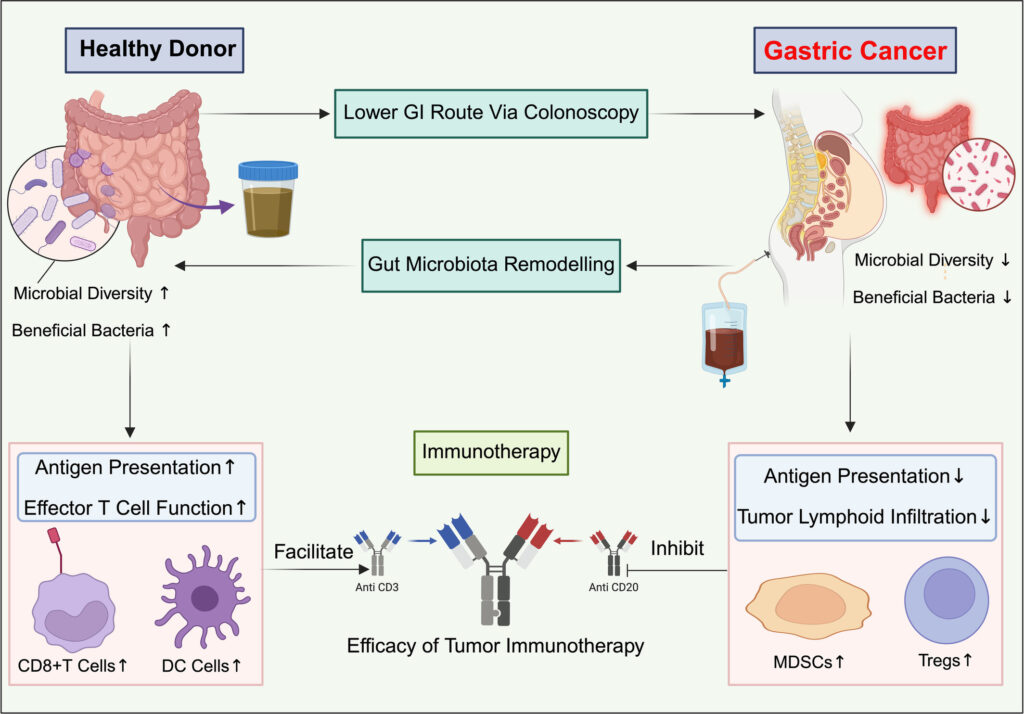
Abstract – Background: Fecal microbiota transplantation (FMT) has emerged as a groundbreaking strategy for modulating the gut microbiome and improving cancer treatment outcomes. This review synthesizes the current evidence on the role of FMT in oncology, focusing on its potential to enhance the efficacy of immunotherapy, restore microbiome homeostasis, and mitigate cancer‐associated complications. Recent Findings: Preclinical and clinical studies have demonstrated that FMT can reprogram the tumor microenvironment, augment immune checkpoint inhibitor responses, and reduce chemotherapy‐induced toxicity. However, risks such as pathogen transmission, immune dysregulation, and unintended microbial shifts necessitate rigorous donor screening and a personalized approach. Challenges in standardization, regulatory frameworks, and mechanistic understanding further complicate their clinical translation. Emerging innovations, including precision microbial consortia, synthetic biology, and biomarker‐driven strategies, have the potential to address these limitations. Conclusion: While FMT holds transformative potential in cancer care, its integration into oncological practice requires robust clinical validation, long‐term safety assessments, and interdisciplinary collaboration to harness its full therapeutic potential.
, A , Cancer Reports. 2026;9(1):e70455.