Midlife window: moderate caffeine consumption and reduced dementia risk
1, Rajasekaran Subbarayan 1*, Rupendra Shrestha 2*
Publications: npj Dementia. 2026;2:79. doi: 10.1038/s44400-026-00134-3
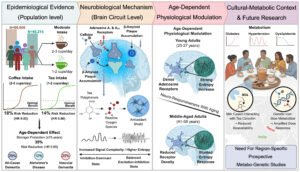
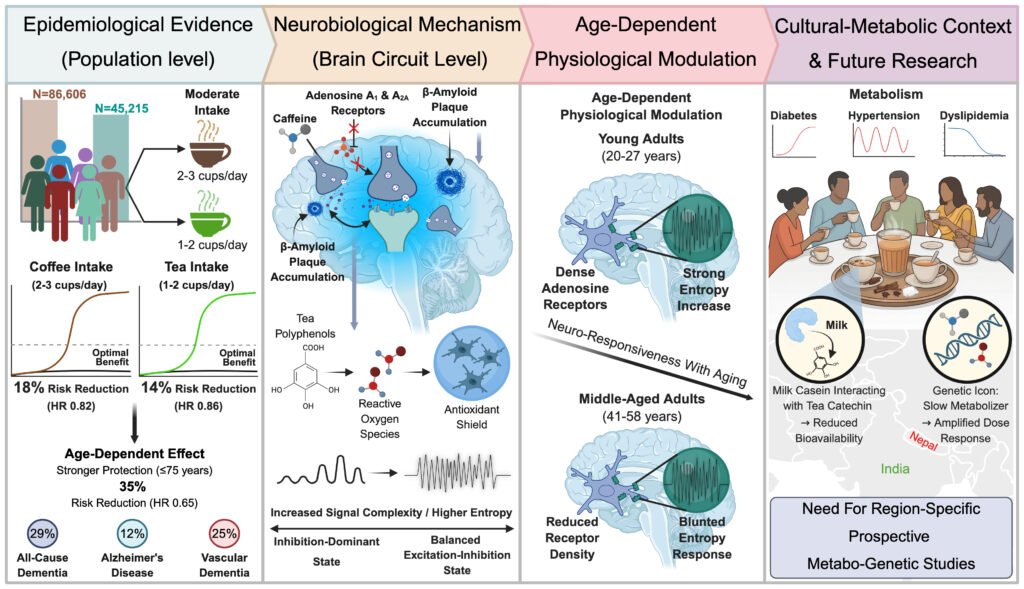
Abstract – Moderate caffeine consumption during midlife is associated with neuroprotective potential, particularly in reducing the risk of dementia. This targeted perspective synthesizes epidemiological and mechanistic evidence on moderate caffeine consumption during midlife (ages 40–65 years) and its association with neuroprotective potential, specifically its potential to reduce the overall risk of dementia. Caffeine functions as an adenosine receptor antagonist, augmenting brain complexity, enhancing neural processing, and reducing cognitive load. These benefits are age-dependent and are further influenced by the CYP1A2 genotype. Notably, caffeine is associated with reduced gray matter volume despite its capacity to enhance cognitive function. However, cultural practices, such as the consumption of coffee or tea prepared with milk and sugar in South Asia, may diminish catechin bioavailability, highlighting the need for region-specific, large-scale prospective studies.
Cite: Balakrishnan R, Subbarayan R, & Shrestha R. Midlife window: Moderate caffeine consumption and reduced dementia risk. npj Dementia. 2026; 2:79.